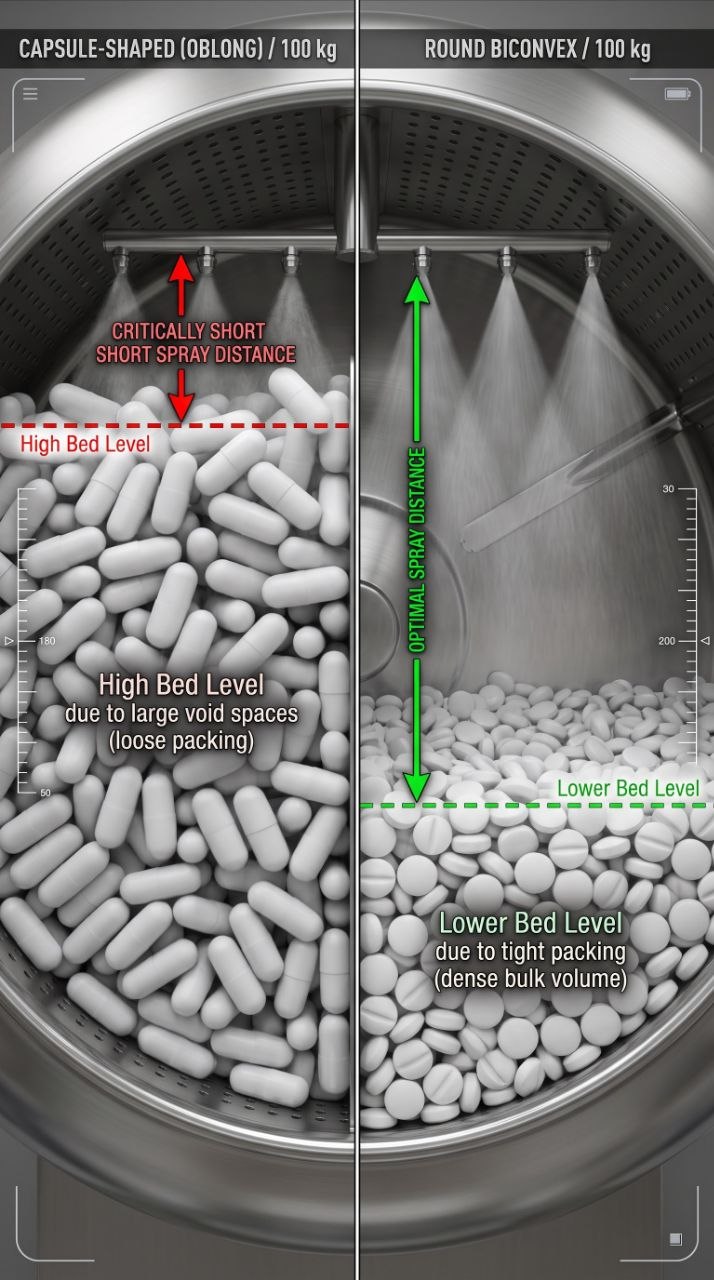
Ever loaded a coating pan with the exact batch weight, yet the bed looked too high or too shallow? You did nothing wrong. You just met two hidden factors: bulk volume and void space. Let's make them simple. If you are new to coating, this one idea will save you a lot of trouble.
## Why Weight Alone Can Mislead You
Kilograms tell you how heavy the load is. They do not tell you how much room it takes. Two batches can both weigh 100 kg, yet one fills the pan noticeably higher. Tablet size, shape and density change from product to product, and sometimes from batch to batch.
If you watch only the scale, you can overload or underload a Glatt, GSHT or Solace pan without realizing it. The approved load range in the batch record is your guide, and your eyes on the bed are the second check. That is why experienced operators look at bed height, not only the number on the scale.
## Bulk Volume and Void Space, Made Simple
Bulk volume is the total space your whole load takes in the pan: tablets plus the gaps between them. Void space is just those gaps, the empty air pockets between tablets.
Think of popcorn in a bucket. Fill it to the brim, give it a shake, and it settles lower. Same popcorn, same weight, different space. Round tablets nestle close together and leave small gaps. Oblong or odd shaped tablets leave bigger gaps. So the same kilograms can give a very different bed height. Another picture: a box of marbles and a box of dried noodles can weigh the same, but the noodles fill far more of the box because they leave bigger gaps.
## Why It Matters on Your Shift
- Overloaded pan: the bed cannot tumble freely, so tablets stick, twin and coat unevenly.
- Underloaded pan: the bed is too shallow, spray may hit the wall or baffles, and tablets fall farther and hit harder.
- Spray distribution: a well sized bed flows smoothly, so every tablet gets its turn in the spray zone.
- Chipping and edge damage: wrong volume means rougher tumbling and more impact on fragile edges.
Say you stage a product that looks slightly bigger than the last one. The scale is right, but the bed sits near the pan lip. That is your cue to pause and report it before spraying starts. A two minute question is always cheaper than a rejected batch.
## 4 Tips for Batch Staging
1. Know your batch record. Load to the approved range for that product, not a number remembered from last time.
2. Watch the bed, not just the scale. After loading, jog the pan and check level and movement. Compare it with the last batch of the same product. If it looks off, tell your supervisor.
3. Notice what changed. New tablet shape, size or supplier? Mention it, because small changes shift volume.
4. Handle tablets gently. Pour slowly, avoid dropping from height, and never press the bed down. Chips start at loading.
Before you start the pan, ask yourself three quick things. Is this the right load for this product? Does the bed move freely and evenly? Does the spray reach the tablets, not the wall?
These habits sit alongside cleanroom discipline and the FDA cGMP expectations for controlled, repeatable processes. ISPE also publishes guidance for solid dosage manufacturing.
Remember: kilograms measure weight, but the pan cares about space. Stay curious, ask questions and report what you see.